
Commercial Bird Spike Installation NYC
Landmark Bird Control is a Commercial Bird Control company. We design, install, and maintain commercial bird netting, spikes, shock systems, and trapping programs for facilities that can’t afford bird damage, downtime, or liability. Landmark Bird Control’s Commercial bird control solutions is here to serve NYC. Professional exclusion and deterrent service designed to protect businesses, warehouses, retail centers, and commercial properties from the structural damage, health hazards, and liability risks caused by pigeons, starlings, and sparrows. Licensed NYC bird control contractors deploy layered solutions including bird netting, spike systems, electric track deterrents, and bird wire installations tailored to each property’s architecture, bird species, and infestation level. For facility managers and property owners across New York City / NYC, investing in a professional commercial bird control program is one of the most cost-effective ways to protect building assets, maintain sanitation compliance, and eliminate the recurring costs of bird damage cleanup and repair. Contact us for all of your Commercial Bird Spike Installation NYC.
Landmark Bird Control
Commercial Bird Spike Installation NYC
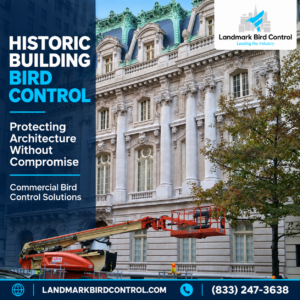
Commercial bird spike installation in NYC is one of the most technically precise and most consequence-dependent bird control installation disciplines in the five borough commercial property market, and the difference between a spike installation that performs for a decade and one that begins failing within a season is determined almost entirely by the specification decisions and the installation execution that a commercial bird control contractor brings to the project. New York City’s commercial buildings present bird spike installation with a set of challenges that have no equivalent in lower density or lower complexity bird control markets. The sheer intensity of the feral pigeon population pressure across all five boroughs means that any gap in spike coverage, any surface left untreated, any ledge section where spike row spacing is inadequate for the bird species involved, and any anchor point that fails under the combination of thermal cycling, structural vibration from urban traffic and mechanical systems, and the physical pressure of birds testing the system continuously will be identified and exploited by the surrounding population faster and more completely than in any other North American commercial bird control environment. Manhattan’s landmarked and architecturally significant building stock adds a preservation compliance dimension to commercial bird spike installation that requires both the selection of spike products compatible with the material and visual standards of protected facades and the documentation capability to satisfy the Landmarks Preservation Commission requirements that apply to installation work on designated properties. The structural substrate diversity of New York City’s commercial building inventory, spanning cast stone and limestone on pre-war Manhattan office buildings, brick and mortar on the outer boroughs’ industrial and commercial building stock, poured concrete on postwar commercial structures, metal coping and parapet cap systems on modern commercial buildings, and glass and aluminum curtain wall systems on contemporary office towers, requires an anchor system selection approach calibrated specifically to each substrate type to ensure that spike rows are secured with sufficient long term holding strength to maintain their position and their deterrent performance against New York City’s bird pressure environment through years of exposure to the city’s full range of weather conditions. Landmark Bird Control has been delivering commercial bird spike installation across New York City since 2000, installing stainless steel and polycarbonate spike systems on commercial buildings of every type throughout all five boroughs. Every Landmark spike installation in New York City begins with a surface-by-surface assessment of the complete building envelope that identifies every active roosting and landing surface, determines the correct spike product specification and row configuration for each surface type and bird species, identifies the appropriate anchor system for each substrate material, and designs complete coverage with no untreated transitions, gaps, or secondary surfaces that birds can relocate to once primary surfaces are treated. Landmark has installed spike systems on some of New York City’s most demanding and most prominent commercial structures including Yankee Stadium, Citi Field, JFK Airport, The Plaza Hotel, The Metropolitan Museum of Art, and facilities operated by the MTA and Port Authority, and every one of those installations reflects the same surface-specific engineering approach and installation precision standard that Landmark brings to every commercial spike project in the five boroughs regardless of scale.
Commercial Bird Spike Installation NYC
The return on investment case for commercial bird spike installation on a New York City commercial building is one of the clearest and most straightforward financial analyses in the commercial property maintenance landscape, because the costs that a properly installed spike system eliminates are ongoing, compounding, and in most cases significantly larger in aggregate than the one-time cost of the installation itself. On a Manhattan commercial building with an active pigeon infestation on primary ledge and parapet surfaces, the annual cost of pressure washing and facade cleaning to manage droppings accumulation on treated stone and masonry represents a recurring operational expense that disappears entirely once effective spike coverage eliminates bird activity from those surfaces. The long term facade maintenance cost implications of allowing acidic pigeon droppings to dwell on limestone and marble surfaces between cleaning cycles, including the accelerated surface erosion, joint deterioration, and eventual pointing and restoration work that contamination-accelerated weathering requires, represent capital expense consequences that sophisticated Manhattan building owners and their asset managers factor into the long term cost of inadequate bird control. On outer borough commercial and industrial buildings, the liability exposure associated with pigeon droppings accumulating on building perimeter walkways, loading dock approaches, and parking areas adjacent to roosting surfaces creates a personal injury risk that building operators and their insurance carriers take seriously, and that a correctly installed perimeter spike program on the roosting surfaces above those areas eliminates permanently. In retail and mixed use commercial environments across all five boroughs, the aesthetic consequence of bird droppings on building signage, canopy structures, and street level facades creates a customer experience and brand presentation impact that building owners and their retail tenants measure in lost foot traffic and lease negotiation leverage, consequences that spike installation on affected surfaces resolves completely and permanently. Landmark Bird Control’s commercial bird spike installation programs in New York City are designed from the beginning to deliver maximum long term return on investment by ensuring that every installation addresses the complete set of roosting surfaces on the building simultaneously, eliminating every ongoing cost category associated with bird activity on treated surfaces in a single program rather than applying partial coverage that allows birds to relocate and continue creating costs from untreated areas. The twenty-five year track record that Landmark has built delivering commercial bird spike installations across New York City’s five boroughs is the strongest available evidence that the company’s installation standard and program design approach deliver the long term performance outcomes that justify the investment and eliminate the ongoing costs that motivated it.
Commercial Bird Spike Installation NYC
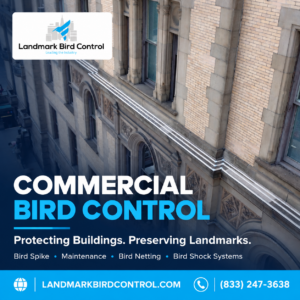
Bird shock system installation in NYC addresses one of the most specific and most important bird control requirements of New York City’s commercial property market: the need for a highly effective long term bird deterrent solution that is essentially invisible at street level and compatible with the visual standards, the landmark preservation requirements, and the architectural integrity expectations of the city’s most prominent and most aesthetically sensitive commercial buildings. New York City’s commercial building environment includes a higher concentration of architecturally significant, visually prominent, and preservation-sensitive commercial structures than any other American city, and for the owners and managers of those buildings, the question of how bird control is implemented is not just a performance question but an aesthetic and compliance question that shapes the solution choices available. Spike systems, while highly effective on appropriate surface types, have a visual profile that is immediately apparent to anyone looking at a treated ledge from street level, which makes them a less suitable choice for the primary ornamental and decorative architectural surfaces of Class A Manhattan office buildings, luxury hospitality properties, cultural institutions, and landmarked commercial structures where the visual integrity of the building exterior is a primary management priority. Low voltage electric track bird shock systems, installed flush to architectural ledges, parapet walls, window sill projections, cornice details, and roofline edges with low profile adhesive or mechanical anchors, deliver a level of visual discretion that makes them the correct solution for those environments.
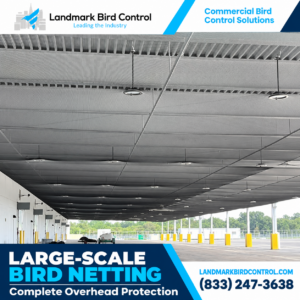
The operational and financial consequences of uncontrolled bird infestations in New York City parking garages accumulate across multiple expense and liability categories simultaneously and persistently, and understanding the full scope of those consequences is essential to evaluating the return on investment that professional bird netting for parking garages in NYC delivers for facility operators across the five boroughs. Vehicle damage liability is the most immediate and most visible consequence category for NYC parking garage operators dealing with active pigeon infestations. New York City parking facilities serve a vehicle population whose owners have a well-established awareness of their rights and a low tolerance for property damage sustained while their vehicle was under the care of the parking operator, and the combination of pigeon droppings that degrade automotive clear coat and paint with the frequency and severity of contact that multi-level parking garage roosting creates means that vehicle damage claims are a persistent and material liability exposure for infested NYC parking facility operators. The acidic chemistry of pigeon droppings creates a surface degradation mechanism on automotive finishes that is both rapid and permanent if droppings are not removed within hours of contact, and in a parking garage where a vehicle may be parked under an active roosting colony for eight to twelve hours, the damage accumulating during a single parking session can be significant enough to generate a legitimate claim against the facility operator. Deck surface contamination from pigeon droppings creates slip and fall hazard conditions on parking deck surfaces, pedestrian walkways, and stairwells that expose New York City parking facility operators to personal injury liability that the city’s active plaintiff bar and high award environment makes a material financial risk. The long term structural consequences of acidic droppings on the concrete deck surfaces, expansion joints, and steel reinforcement members of New York City parking structures are capital expense consequences that lenders, investors, and building owners with long term asset management perspectives take seriously, because the accelerated deterioration of structural concrete from continuous droppings contact shortens the capital replacement cycle of parking deck components in ways that materially affect the long term financial performance of the asset. Landmark Bird Control’s bird netting programs for New York City parking garages are engineered and installed to address every one of those consequence categories simultaneously by creating complete physical exclusion of birds from every treated level of the parking structure, eliminating vehicle damage liability, reducing deck contamination and the associated slip hazard exposure, and protecting the structural integrity of the parking deck from the ongoing corrosive impact of pigeon droppings. The netting systems Landmark installs in New York City parking garages are specified with the net gauge, anchor system design, and coverage completeness required to maintain full exclusion performance against New York City’s intense pigeon population pressure for years after installation, protecting the parking facility operator’s investment and eliminating the ongoing infestation costs that motivated it.
Bird Netting
Heavy-duty, low-visibility netting that fully excludes birds from rooftops, loading docks, courtyards, and large open structures.
Bird Shock Systems
Discreet, low-voltage electric track systems that deliver a harmless static shock to deter birds from landing no harm, no mess, just results.
Bird Spikes
Stainless steel and polycarbonate spike systems installed on ledges, signage, and beams a permanent, non-lethal physical deterrent.
Pigeon Trapping
Humane, USDA-compliant live trapping and relocation programs for facilities dealing with established pigeon populations.
Seagull Deterrent
Specialized abatement programs for coastal and waterfront facilities dealing with seagull nesting, roosting, and aggressive behavior.
Audio Deterrents
Bioacoustic and distress-call systems that disperse flocks from large open areas where physical barriers aren’t practical.
Design Build
We partner directly with architects and contractors to engineer bird control into new construction and major renovation projects from day one.
Nuisance Wildlife Control
Live capture and removal services for nuisance birds and wildlife, including ongoing bird management programs for repeat-risk sites.
Remediation & Guano Abatement
Safe cleanup, disinfection, and droppings removal that protects your facility’s structure and your tenants’ or workers’ health.
Commercial Bird Spike Installation NYC
The track profile itself, typically eight to ten millimeters in height above the surface it is mounted on, is effectively invisible from any distance beyond immediate proximity to the treated surface, making shock track installation the preferred solution for buildings where maintaining the architectural appearance of the exterior is a non-negotiable requirement alongside bird control performance. The performance of a bird shock system installation in New York City’s high pressure bird control environment is entirely dependent on the completeness of the coverage design and the quality of the installation execution. A shock track system with coverage gaps between sections, with dead zones created by connectivity failures at section joints or solar panel connections, or with sections that have lost contact with the mounting surface and are no longer delivering a consistent charge to birds landing on the track, provides incomplete deterrence in a bird pressure environment where every gap in coverage is identified and exploited by the surrounding population continuously. Landmark Bird Control has been providing professional bird shock system installation across New York City since 2000, specifying and installing commercial grade low voltage electric track systems for NYC facilities across the full range of building types and architectural contexts where shock systems are the correct solution. Every Landmark shock system installation in New York City is designed from a complete surface assessment that identifies every roosting area requiring treatment, specifies the correct track system for the bird species and pressure level involved, engineers complete coverage with verified electrical continuity across every section, and includes a system testing and commissioning protocol that confirms full system performance before the installation is signed off. The application range of bird shock system installation in New York City commercial environments extends significantly beyond the primary use case of architectural ledge and parapet treatment on visually sensitive commercial buildings, encompassing a broad range of commercial bird control scenarios across the five boroughs where the combination of shock track’s low visual profile, its surface-mounting versatility across a wide range of structural substrates and configurations, and its effectiveness as a behavioral conditioning deterrent makes it the optimal solution for the specific challenge being addressed. Rooftop mechanical equipment protection is one of the most important secondary applications of bird shock system installation on New York City commercial buildings, where the cooling towers, HVAC equipment housings, rooftop communications infrastructure, and electrical conduit systems that serve commercial buildings across all five boroughs are attractive nesting and perching sites for pigeons whose droppings and nesting material foul equipment intakes, degrade mechanical seals and gaskets, contaminate cooling water systems, and create maintenance access hazards for rooftop service personnel. Shock track installed across the flat and low slope surfaces of rooftop mechanical equipment housings, along the top rails of equipment screens and penthouse walls, and on the structural framing elements that pigeons use as perching positions adjacent to mechanical equipment eliminates bird activity from those areas without interfering with equipment access or maintenance operations in the way that netting systems sometimes can in tight rooftop mechanical environments. Transit facility and transportation infrastructure bird shock system installation represents another significant New York City application category, where the MTA’s subway station structures, rail yard facilities, and above-grade transit infrastructure across all five boroughs face pigeon and starling pressure that creates contamination, maintenance, and passenger experience consequences that the Authority addresses through professionally specified and installed shock track programs on the structural surfaces where bird activity is most consequential. The specific requirements of transit facility shock system installation, including the need for track specifications compatible with the electrical environment of transit infrastructure, the requirement for installation approaches that do not interfere with signal, communications, and power systems, and the scheduling constraints of active transit facilities that limit installation access windows, are requirements that Landmark Bird Control’s NYC transit facility bird control experience equips the company to address correctly. Every Landmark bird shock system installation in New York City, regardless of the application category, is backed by an ongoing maintenance program that includes scheduled system inspection visits, electrical continuity testing across every track section, adhesive and mechanical anchor integrity verification, debris clearing from track channels that can reduce deterrent effectiveness, and immediate repair of any identified failures to ensure that every section of every installed system remains fully operational against New York City’s continuous bird pressure.
Get a Free Commercial Bird Netting Installation Quote in NYC Today
Bird netting for parking garages in NYC is the most effective and most permanent large scale bird exclusion solution available for New York City parking structure operators dealing with established pigeon and starling infestations, and the decision to invest in professionally engineered parking garage bird netting consistently proves to be the most cost justified bird control investment a NYC parking facility operator can make when the full scope of the ongoing infestation costs is properly evaluated against the one-time program investment. New York City parking garages occupy a specific position in the commercial bird control landscape that makes them among the most challenging and most consequential bird netting installation environments in the five boroughs. The structural diversity of NYC parking facilities spans an enormous range of configurations, from the two and three level open-frame concrete garages that serve commercial and residential buildings across all five boroughs to the massive multi-level parking structures adjacent to major commercial and institutional campuses in Manhattan, to the transit adjacent parking facilities serving commuter rail and subway operations in the outer boroughs, to the underground and podium parking levels incorporated into modern mixed use developments across the city. Each of those structural categories presents bird netting installation with its own specific engineering challenges. Open-frame concrete garages with exposed beam and column systems, open bay entries on every facade elevation, and minimal existing enclosure create a structural environment where netting systems must span large open bay dimensions with anchor points in concrete substrates of varying condition and accessibility, and where the netting coverage design must address multiple open faces simultaneously to achieve complete bird exclusion rather than simply deflecting birds from the most visible roosting surfaces into open bay entries that remain unprotected. Large multi-level Manhattan parking structures incorporate transfer levels, elevator cores, stair towers, and mechanical rooms that create complex internal geometry requiring custom netting system design to achieve complete coverage across every level without leaving the internal structural features that birds exploit as alternative roosting sites within the netting perimeter. Underground and podium parking levels present access and ventilation constraints that affect both netting system specification and installation methodology in ways that require experienced urban parking structure netting installation capability to navigate correctly. Landmark Bird Control has been delivering bird netting programs for parking garages across New York City since 2000, engineering and installing heavy duty netting systems for parking facilities of every size and structural configuration throughout all five boroughs including the Battery Park Parking Garage in Manhattan. Every Landmark parking garage netting installation in New York City begins with a level by level structural assessment that maps every roosting zone, every open bay entry point, every internal structural feature that birds are using, and every engineering constraint that affects the netting system design before producing a custom engineered netting program built specifically for that parking structure.